Eye exam prices don’t get posted in a window like a lunch special, so most people only find out once they start calling around. Add insurance to the mix and the math gets murkier.
Without insurance, an eye exam in Minneapolis usually costs $60 to $250. With a vision plan, your share often drops to a $10 to $40 copay.
That’s a wide gap, and it comes down to what happens during your appointment. A quick prescription update sits at the low end, while an adult exam that includes a closer look at the health of your eyes lands higher.
What You’ll Pay Without a Vision Plan
Most clinics price a standard exam somewhere inside that $60 to $250 window. What you actually get for the money varies more than the number suggests.
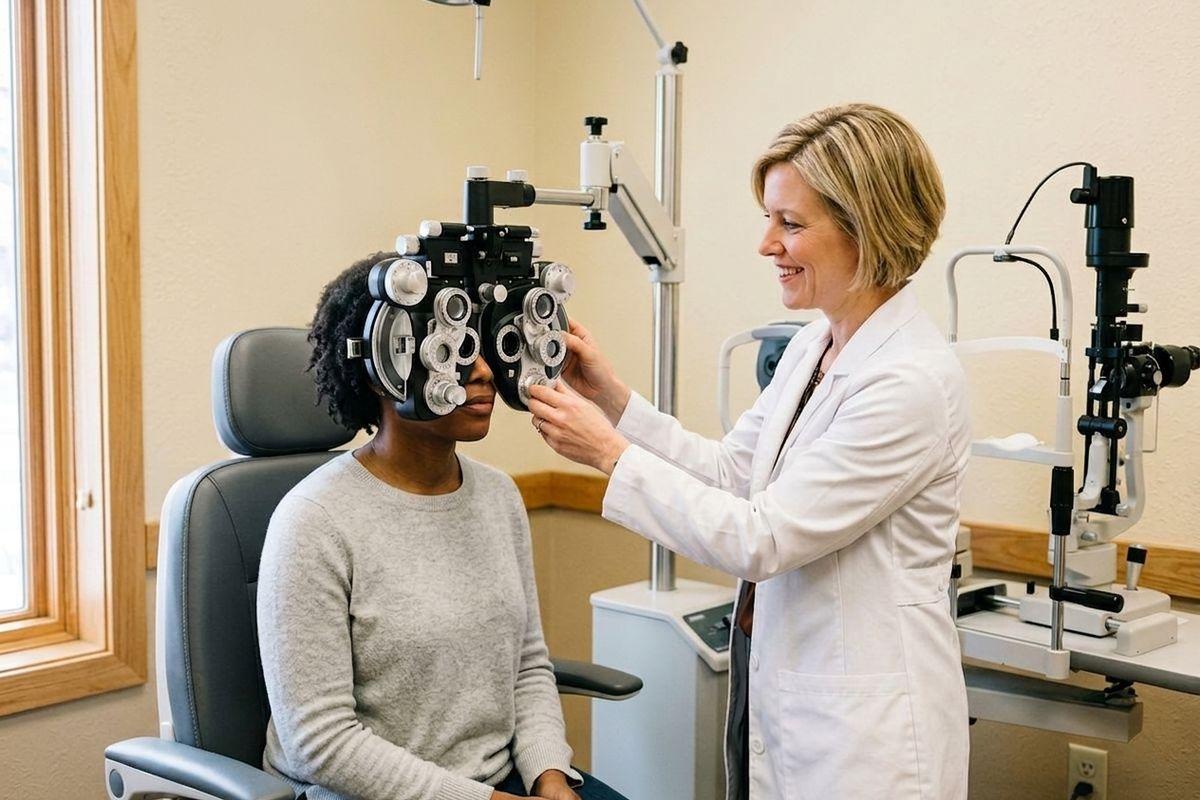
A basic exam measures how sharply you see, pins down your prescription, and checks the pressure and tissue inside your eye. Some offices stop there. Others fold in imaging or dilation as standard practice.
Equipment, staffing, and appointment length explain most of the difference from one office to the next.
New patients tend to pay more than returning ones, since a first visit means building your chart from scratch and running a wider set of baseline tests. If you’re paying out of pocket, ask about the self-pay rate when you call. Plenty of clinics quote a lower cash price than the number they bill insurers.
What Affects the Price of Your Eye Exam
Two appointments share the name “eye exam” and do fairly different work.
A routine exam answers whether you can see clearly and updates your glasses or contact lens prescription. Short, focused, and usually the cheaper option.
A comprehensive exam goes further. Your optometrist looks for early glaucoma, signs of diabetic retinopathy, and other changes that show up long before you notice anything. More time and more testing raises the fee.
Extras That Add to Your Total
Ask what’s bundled before you book, because a handful of common add-ons carry their own charge:
- Retinal imaging that photographs the back of your eye
- Dilation drops, when they aren’t part of the base price
- A contact lens fitting that measures your eye and tests lens options
- A follow-up visit to see how a new lens is working for you
Each one takes extra time and equipment, so clinics bill them separately.
What Insurance Actually Covers
Vision plans and medical plans handle eye care differently, and knowing which one applies keeps you from guessing at the counter.
Vision insurance generally covers one exam per year plus an allowance toward glasses or contacts. You pay the copay, then anything you add on top.
Medical insurance takes over when there’s a health reason behind the visit. Eye pain, sudden redness, or new floaters get billed as medical appointments, and so do diabetes-related follow-ups.
Medicare follows the same logic. It doesn’t pay for routine exams, though it does cover yearly diabetic eye exams and glaucoma testing for people at higher risk.
Call your plan before you book and ask two things: what your copay runs, and whether the optometrist is in network. FSA and HSA dollars can pick up whatever’s left.
Low-Cost and Free Eye Exam Options Near You
Cost keeps plenty of people out of the exam chair far longer than they’d like. A few routes can help:
- Community health centers that set fees on a sliding scale based on income
- Financial assistance programs that connect uninsured adults with reduced-cost exams
- Charitable groups that help cover glasses for people who qualify
- Clinics that let you spread payments out over a few months
Pick up the phone and ask. Front desk staff usually know which local program fits your situation.
How Often You Should Get Your Eyes Checked
Your age and your eye health set the schedule.
Kids often get a quick vision screening at their wellness visits, but screenings only flag the obvious. A children’s eye exam with an optometrist takes a fuller look when something seems off, and it’s worth booking before the school year starts.
Adults generally do well with a visit every 1 to 2 years. A baseline exam around 40 gives your optometrist a reference point to compare against later. Past 60, an annual visit makes more sense.
A few symptoms are worth booking sooner for:
- Blurry vision up close or at a distance
- Headaches after a long stretch of screen work
- Trouble driving after dark
- Eye strain that sticks around after you rest
- Double vision
Don’t wait for your next scheduled appointment if any of these turn up.
Get a Real Number for Your Next Exam
Pricing gets a lot clearer once someone knows what your eyes need. Call Perspectives Vision Clinic and the team can walk you through your exam options and check what your plan covers before you come in.
Book your appointment and get straight answers about your eyes and your bill.